On this page (11)
- What is a marketing funnel?
- The four stages of a marketing funnel
- Stage 1: Awareness
- Stage 2: Consideration
- Stage 3: Decision
- Stage 4: Loyalty
- A worked example: a local physiotherapy clinic
- How to find where your funnel is leaking
- Common funnel mistakes
- Key takeaways
- Want help building a funnel that brings in customers?
If you’ve spoken to a marketing agency, watched a YouTube video about ads or read a few blogs, you’ve probably heard the word “funnel”. Top of funnel, bottom of funnel, funnel stages, sales funnel. It can sound like jargon.
The idea behind it is simple, and once you understand it, it changes how you think about every post, ad and email you send.
This guide explains what a marketing funnel is, what each stage means, what content and ads fit each stage, and how to build a simple funnel for your own business.
In this post:
- What a marketing funnel is (in one sentence)
- The four stages of a funnel
- What to post, run and send at each stage
- A worked example for a local business
- How to spot where your funnel is leaking
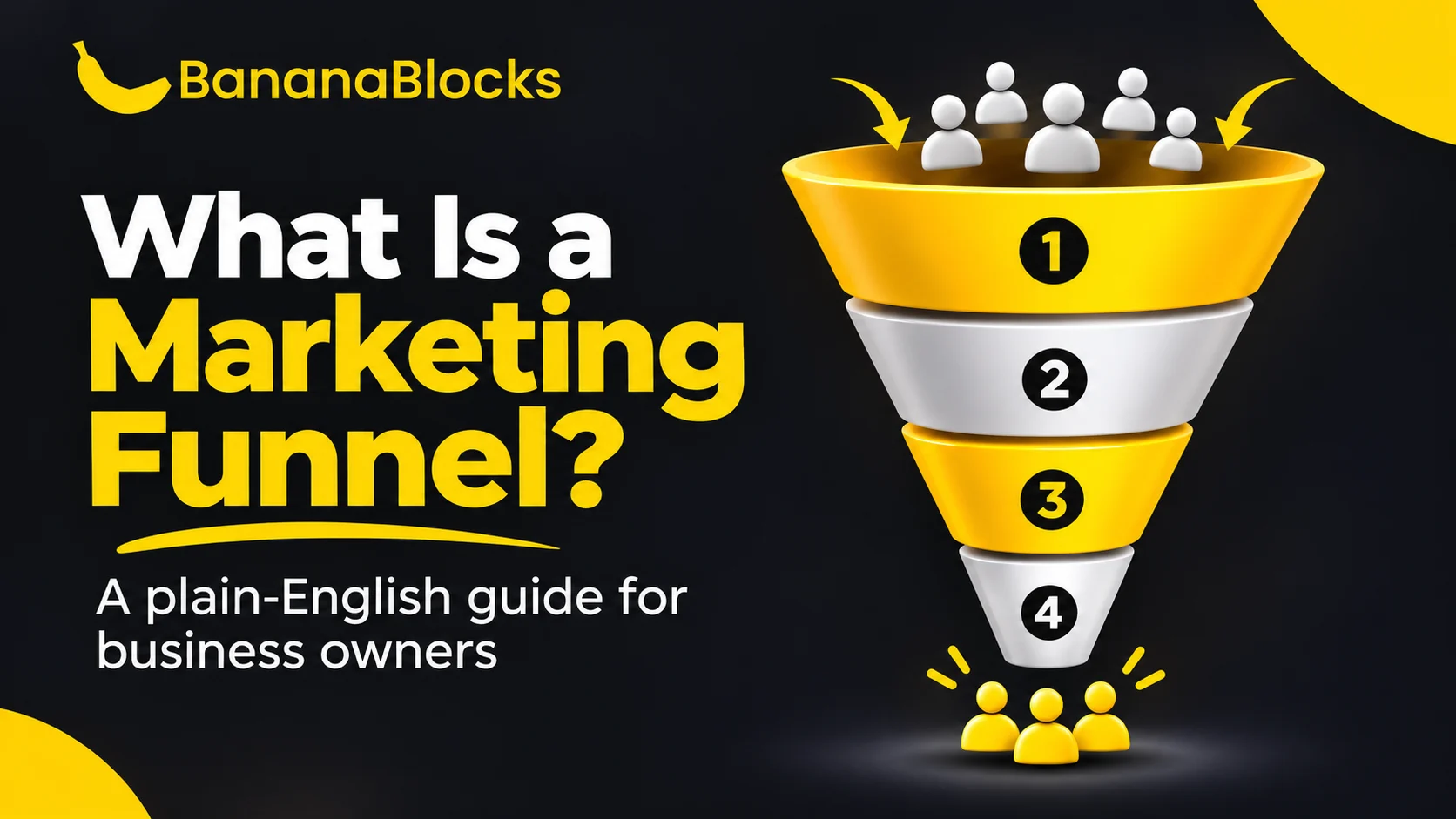
What is a marketing funnel?
A marketing funnel is the journey a person takes from first hearing about your business to becoming a paying (and hopefully repeat) customer.
It’s called a funnel because it’s wide at the top and narrow at the bottom. Lots of people might see your Instagram Reel. Fewer will visit your website. Fewer still will call or message you. And only some of those will buy.
That’s normal. The goal isn’t to get everyone to the bottom. It’s to:
- Bring the right people into the top
- Help them move to the next step with the right message at the right time
- Fix the places where good prospects drop out
Pro tip: A funnel is a way of thinking, not a piece of software. You don’t need special tools to use one. A notebook and an honest look at how your customers actually find and choose you is enough to start.
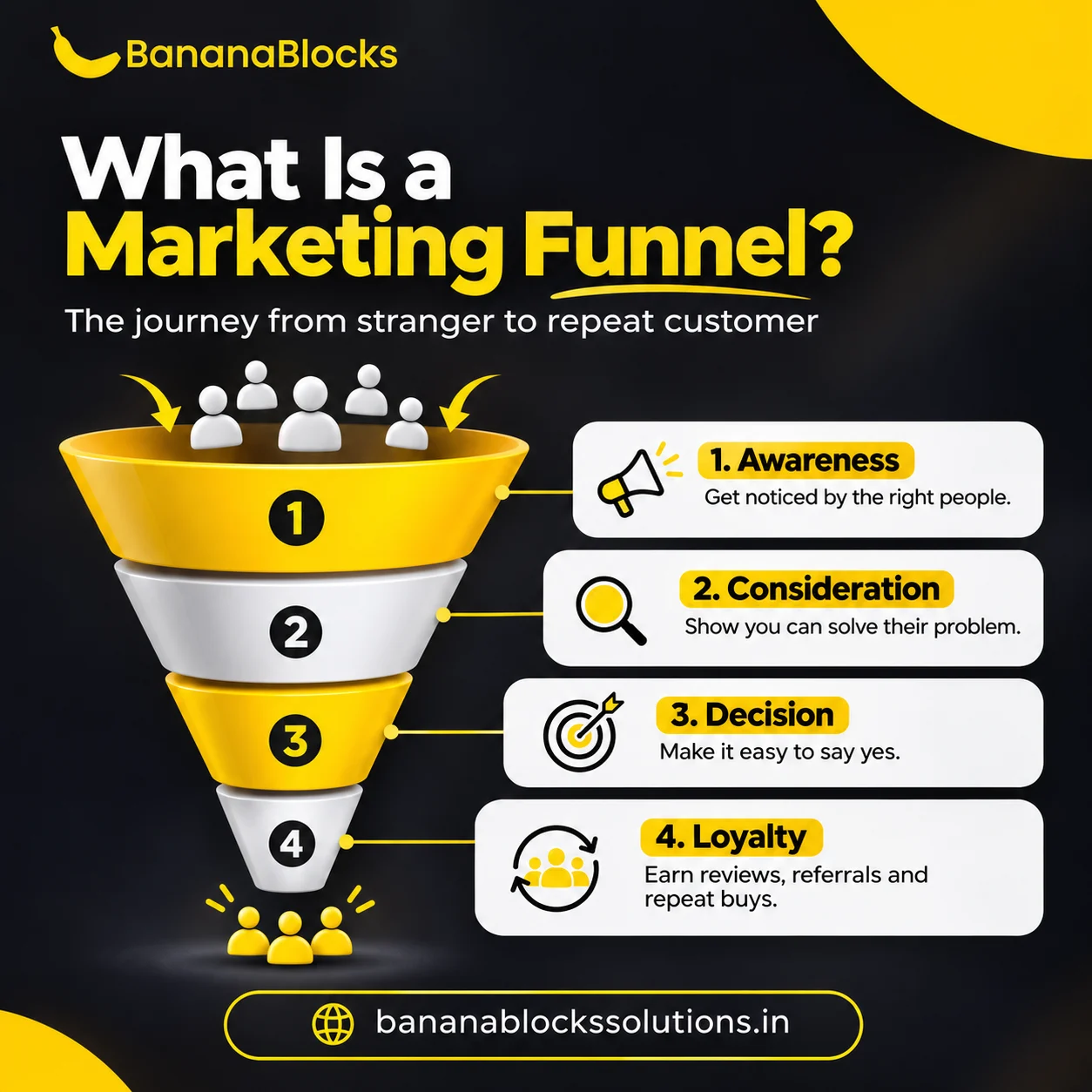
The four stages of a marketing funnel
Different marketers use different names, but most funnels boil down to four stages.
| Stage | What the customer is thinking | Your job |
|---|---|---|
| 1. Awareness | “I have a problem” or “I’ve never heard of you” | Get noticed by the right people |
| 2. Consideration | “What are my options? Who can I trust?” | Show you understand their problem and can solve it |
| 3. Decision | “Is this the right choice? What does it cost?” | Make it easy and low-risk to say yes |
| 4. Loyalty | “Was it worth it? Should I come back or recommend them?” | Deliver well, stay in touch and ask for reviews and referrals |
You’ll sometimes hear these called top of funnel (TOFU), middle of funnel (MOFU) and bottom of funnel (BOFU), with loyalty added at the end. They mean the same thing.
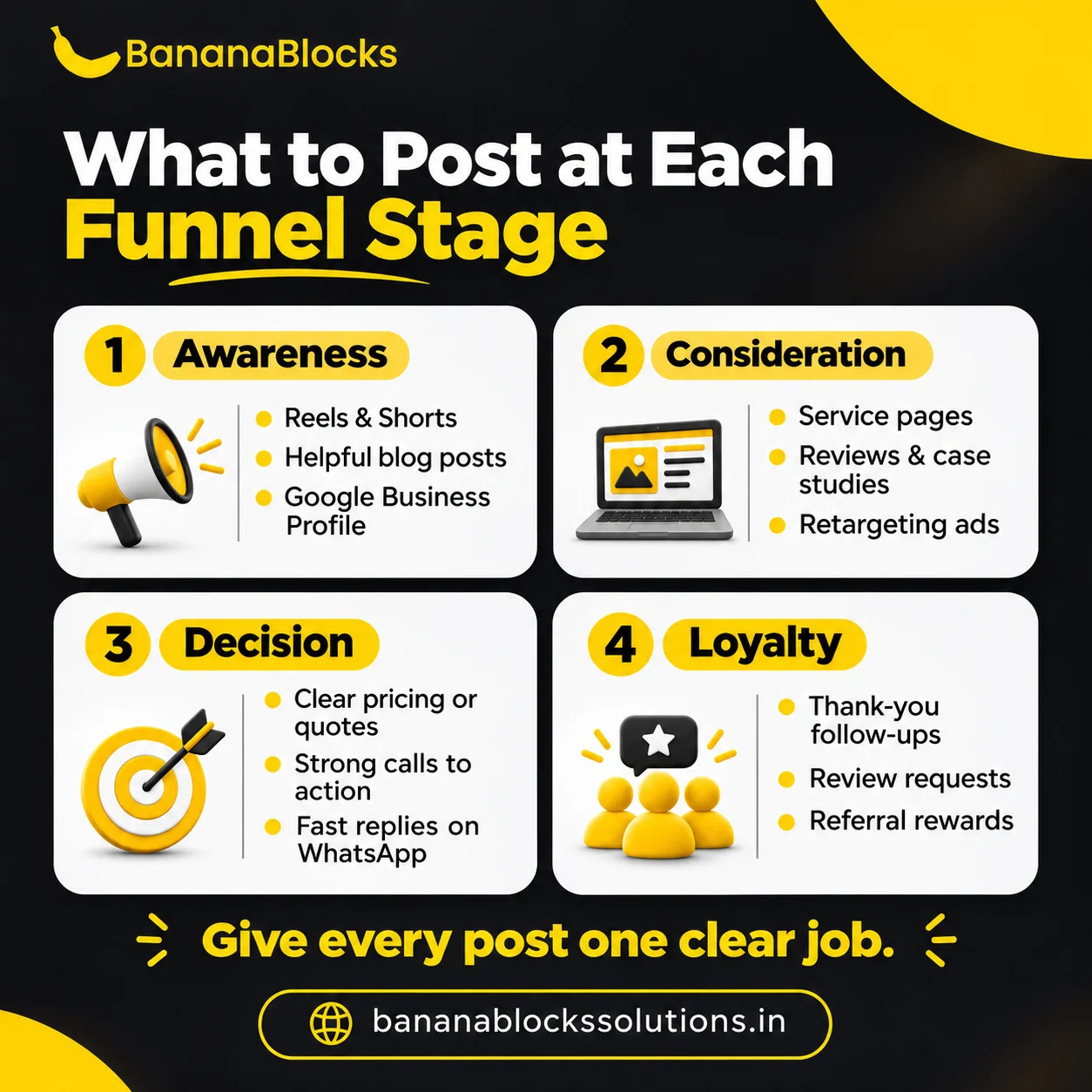
Stage 1: Awareness
At this stage, people either don’t know your business exists, or they don’t yet realise they need what you offer.
What works here:
- Short-form video (Reels, Shorts) that entertains, educates or shows your work
- Helpful blog posts that answer common questions
- Your Google Business Profile, so you show up in local searches
- Broad social media ads to people in your area or niche
- Collaborations with local pages, creators or complementary businesses
What to measure: Reach, views, profile visits and new followers. Don’t judge awareness content on sales alone. Its job is to start the relationship.
Go deeper: Awareness Stage Marketing: How to Get Discovered by the Right Customers
Stage 2: Consideration
Now people know they have a need and are weighing up options. They’re comparing you with competitors, reading reviews and asking questions.
What works here:
- Detailed service or product pages on your website
- Comparison and “how to choose” guides
- Customer reviews, testimonials and case studies
- Retargeting ads to people who visited your site or watched your videos
- An email or WhatsApp sign-up offer, such as a free guide, checklist or consultation
What to measure: Website visits, time on page, email or WhatsApp sign-ups and enquiries.
Go deeper: Consideration Stage Marketing: How to Win Trust When Customers Compare Options
Stage 3: Decision
The person is close to buying. They need reassurance and a clear, easy next step.
What works here:
- Clear pricing, or a clear way to get a quote
- Offers with real deadlines, free trials or first-visit discounts
- Strong calls to action: “Book now”, “Get today’s price”, “Order on WhatsApp”
- Search ads for people actively looking for what you sell
- Fast replies to enquiries, including automated responses after hours
- Guarantees, FAQs and easy payment options to remove doubts
What to measure: Calls, bookings, orders, conversion rate and cost per lead or sale.
Go deeper: Decision Stage Marketing: How to Turn Interested Prospects Into Customers
Stage 4: Loyalty
Many funnels stop at the sale, but for most small businesses, repeat customers and word of mouth are where the real profit is.
What works here:
- Thank-you messages and helpful follow-ups after purchase
- Review requests with a direct link
- Loyalty offers, early access to sales and birthday or anniversary messages
- Referral rewards (where platform and legal rules allow)
- Useful newsletters that keep you top of mind
What to measure: Repeat purchase rate, number of reviews, referrals and customer lifetime value.
Go deeper: Customer Loyalty Marketing: How to Turn Buyers Into Repeat Customers and Referrers
A worked example: a local physiotherapy clinic
Here’s how a simple funnel could look for a physiotherapy clinic:
| Stage | Content and ads | Next step for the customer |
|---|---|---|
| Awareness | Reels showing quick back-pain stretches; Google Business Profile with photos and reviews | Follow the page or visit the website |
| Consideration | Blog post on “When to see a physio for back pain”; retargeting ad with patient testimonials | Download a free posture guide via WhatsApp |
| Decision | WhatsApp follow-up with a first-session offer; Google search ad for “physiotherapist near me” | Book a first appointment |
| Loyalty | Exercise reminders after each session; review request; referral offer for family members | Leave a review, rebook and refer |
Notice how each piece of content has one clear job: move the right person to the next step.
How to find where your funnel is leaking
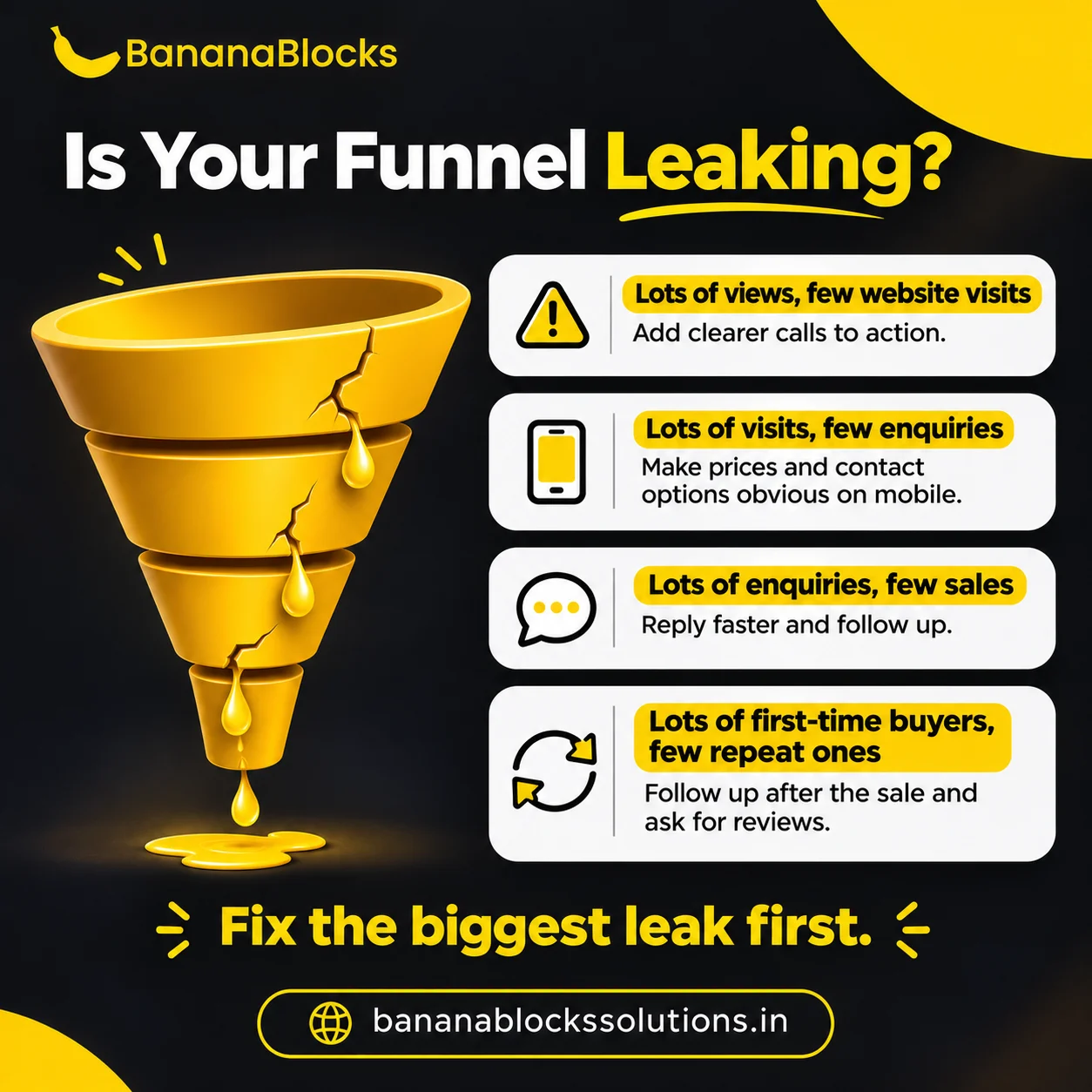
Every funnel loses people between stages. The question is where you’re losing too many. Look at each step and ask:
- Lots of views but few website visits? Your content may not give people a reason to find out more. Add clearer calls to action.
- Lots of website visits but few enquiries? Check your landing pages. Are prices, contact options and next steps obvious on mobile?
- Lots of enquiries but few sales? Look at your reply speed, follow-up process and how you handle price questions.
- Lots of first-time customers but few repeat ones? Focus on after-sale follow-ups, reviews and loyalty offers.
Fixing the biggest leak usually brings better results than spending more money at the top.
Common funnel mistakes
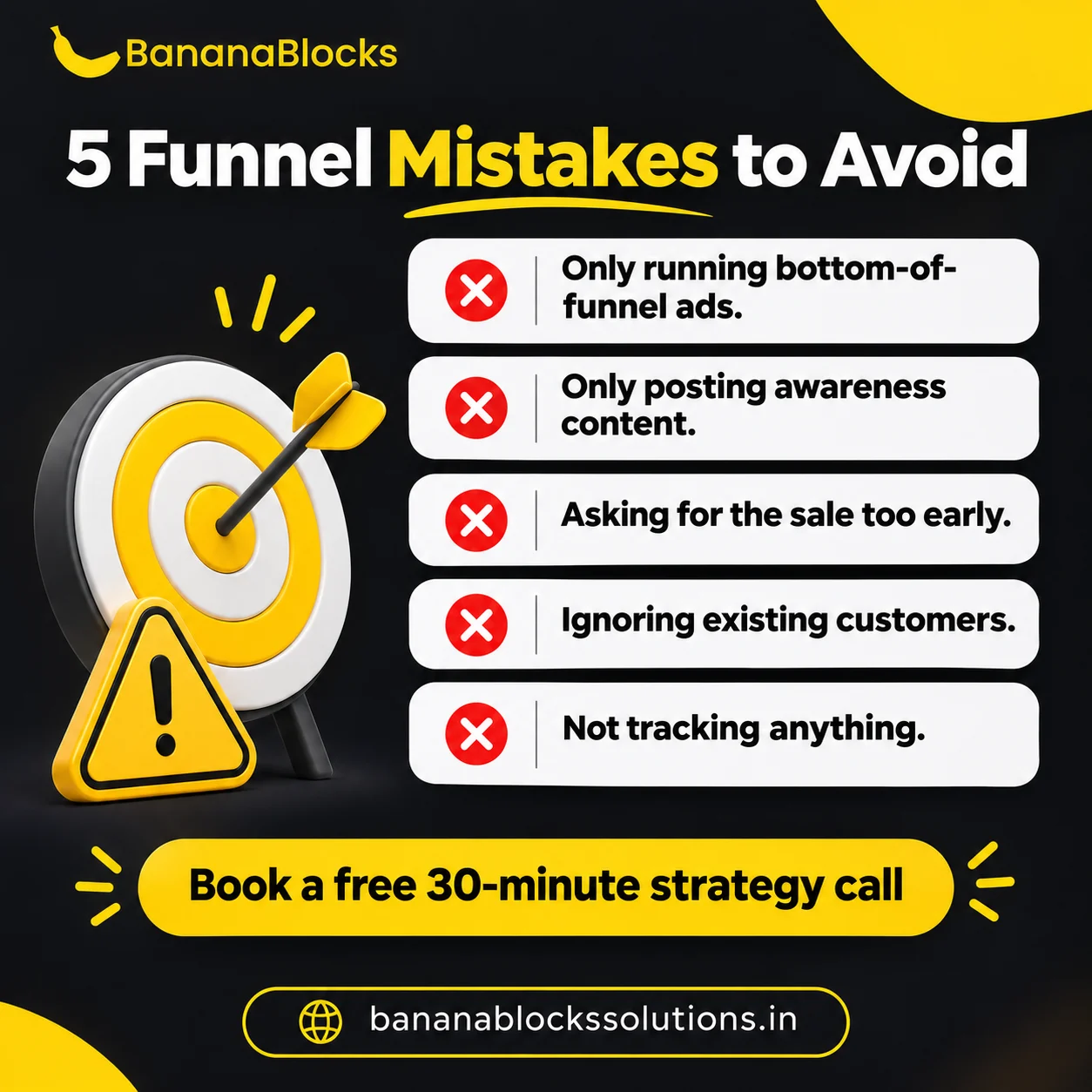
- Only running bottom-of-funnel ads. If nobody knows you, there’s no one ready to buy.
- Only posting awareness content. Lots of likes, but no clear path to enquire or buy.
- Asking for the sale too early. Someone who just discovered you may not be ready for “Buy now”.
- Ignoring existing customers. Your happiest customers are often your best marketing.
- Not tracking anything. Without basic numbers at each stage, you can’t tell where to improve.
Key takeaways
- ✅ A marketing funnel maps the journey from stranger to repeat customer
- ✅ Use four stages: awareness, consideration, decision and loyalty
- ✅ Give every post, ad and email one clear job at one stage
- ✅ Measure each stage with the right numbers, not just sales
- ✅ Find the biggest leak between stages and fix that first
- ✅ Don’t forget loyalty: reviews, referrals and repeat customers
Want help building a funnel that brings in customers?
A good funnel ties your social media, ads, website and follow-ups together so each one supports the next.
BananaBlocks Solutions helps small and growing businesses plan and build marketing funnels, from awareness campaigns and landing pages to WhatsApp follow-ups and review requests.
Book a free 30-minute strategy call and we’ll map out your current funnel and show you where you’re losing customers.

Written by
Andrew Akshat
Writes for the BananaBlocks team about websites, SEO and digital growth for small and growing businesses.
More on Digital Marketing Strategy