On this page (14)
- What is the decision stage?
- The 4 things that stop people buying
- How to make saying yes easy
- Make pricing clear
- Reduce the risk
- Shorten the path
- Reply fast
- Give a reason to act now
- Ads and messages that close the deal
- How to measure the decision stage
- Common decision-stage mistakes
- What comes next
- Key takeaways
- Want more of your prospects to become customers?
This is part 3 of our 4-part funnel series. Start with What Is a Marketing Funnel? or catch up on part 2, Consideration Stage Marketing.
They found you. They compared you with the alternatives. They read your reviews and looked at your work. Now they’re almost ready to say yes.
This is the decision stage, the narrow end of the marketing funnel, and it’s where small details make a big difference. A slow reply, a confusing price, a checkout that doesn’t work on mobile or one unanswered doubt can send a ready buyer to a competitor at the very last step.
This guide covers what customers need to feel confident buying, how to make it easy to say yes, which ads and messages work at this stage, and how to measure it.
In this post:
- What the decision stage is
- The 4 things that stop people buying
- How to make saying yes easy
- Ads and messages that close the deal
- How to measure the decision stage
What is the decision stage?
The decision stage is when a prospect has narrowed their options and is ready to act: book, buy, call, sign up or ask for a final quote.
Your job here is different from earlier stages. You don’t need to grab attention or explain the basics any more. You need to:
- Remove any remaining doubts
- Make the next step clear, quick and easy
- Give them a good reason to act now rather than later
Pro tip: Think of the decision stage as removing friction. Every extra click, form field, unanswered question or wait is a chance for someone to change their mind.
The 4 things that stop people buying
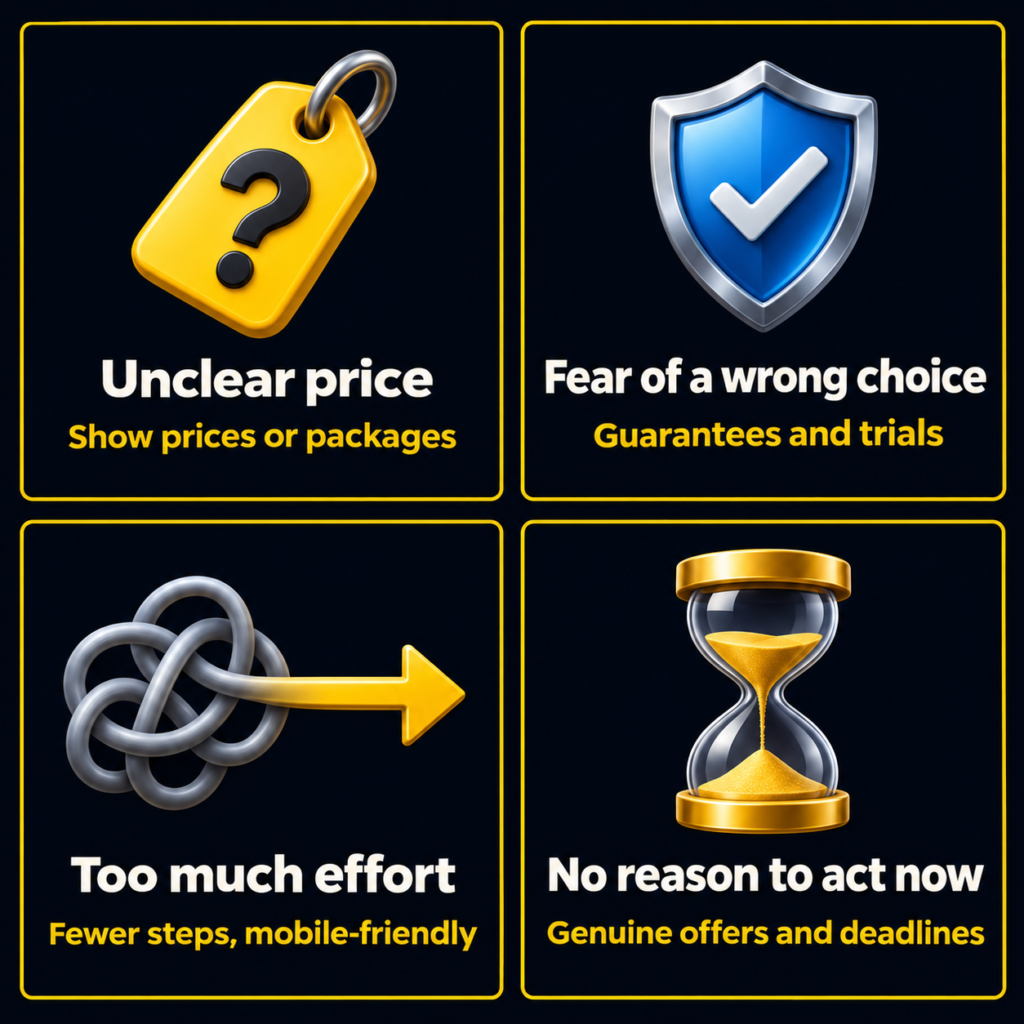
When a ready prospect doesn’t convert, it’s usually for one of these reasons:
| Blocker | What the customer is thinking | How to remove it |
|---|---|---|
| Uncertainty about price | “What will this actually cost me?” | Clear prices, packages or a quick quote process |
| Fear of making the wrong choice | “What if it doesn’t work out?” | Guarantees, trials, easy cancellation, clear policies |
| Too much effort | “This is complicated, I’ll do it later” | Fewer steps, mobile-friendly booking, WhatsApp ordering |
| No reason to act now | “I’ll come back to it” | Genuine offers, limited slots, seasonal deadlines |
Look at your own sales process through these four lenses. Most businesses find at least one easy fix.
How to make saying yes easy
Make pricing clear
If you can show prices, show them. If prices vary, give a starting price, a typical range or simple packages. If you need to quote, tell people exactly how quickly they’ll get one.
Reduce the risk
Offer reassurance that fits your business: a satisfaction guarantee, a free first session, a trial period, a clear refund or rescheduling policy, or a warranty. Only promise what you can genuinely deliver.
Shorten the path
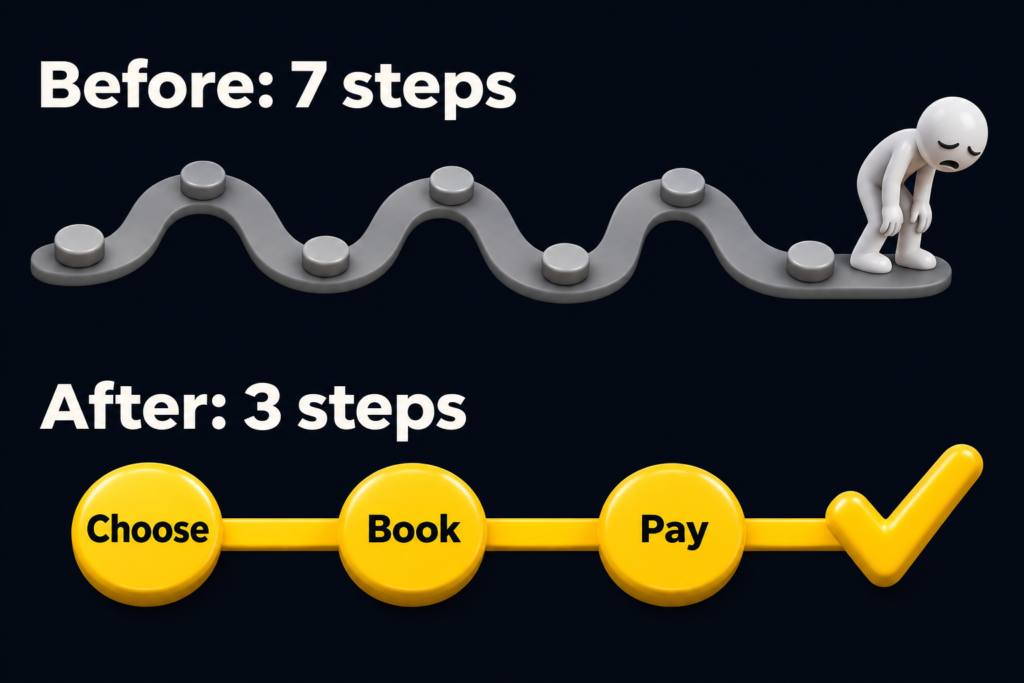
Count the steps from “I want this” to “Done”. Then cut as many as you can:
- One clear call to action per page, such as “Book now”, “Get my quote” or “Order on WhatsApp”
- Short forms that only ask for what you really need
- Online booking or a calendar link instead of back-and-forth messages
- Payment options your customers prefer, such as UPI, cards and cash on delivery where it makes sense
- A checkout and booking flow that works smoothly on mobile
Reply fast
Many customers contact more than one business. A fast, helpful reply often wins the sale. Use instant auto-replies, WhatsApp quick replies and notifications so new enquiries never wait. Our marketing automation guide shows how to set these up.
Give a reason to act now
A genuine reason to act today can help people stop putting it off:
- Limited appointment slots this week
- A festive or seasonal offer with a real end date
- A bonus for booking early, such as a free add-on
- Stock or batch limits, if they’re real
Only use deadlines and scarcity that are true. Fake urgency damages trust, and it can break platform ad rules.
Ads and messages that close the deal
At the decision stage, your ads and messages should be specific and action-focused.
- Search ads on high-intent keywords. People searching for “[service] near me”, “[product] price” or “book [service]” are often ready to act. Send them straight to a matching landing page.
- Retargeting with offers and proof. Show people who visited your pricing or booking pages a reminder with a review, a guarantee or a limited offer.
- Click-to-WhatsApp and call ads. For businesses where customers like to ask a final question, ads that open a chat or a call can convert well. See our WhatsApp marketing playbook.
- Abandoned cart and booking reminders. A friendly reminder a few hours later can bring back people who got distracted.
- Personal follow-ups. For higher-value services, a short personal message after a quote (“Any questions I can answer?”) often makes the difference.
Make sure every ad and the page it leads to say the same thing. If the ad promises “Free first consultation”, the landing page should show that offer immediately. Our ad copy formulas include several that work well for decision-stage ads, like offer + deadline and objection crusher.
How to measure the decision stage
This is where you measure actual business results:
| Metric | Where to find it | What it tells you |
|---|---|---|
| Conversion rate | Google Analytics, ad platforms | What share of visitors take your main action |
| Bookings, orders and calls | Your booking system, store, call tracking, WhatsApp labels | How many people actually commit |
| Cost per lead or sale | Google Ads, Meta Ads Manager | Whether your ads pay for themselves |
| Quote-to-sale rate | Your own records | How well your follow-up turns quotes into customers |
| Cart or booking abandonment | Your store or booking platform | Where people drop out at the last step |
| Reply time | Spot checks of your inbox and WhatsApp | Whether slow replies cost you sales |
If lots of people reach your booking or checkout page but few finish, the problem is usually friction or doubt on that page. Test it yourself on a phone.
Common decision-stage mistakes
- Making people hunt for the next step. Your call to action should be obvious on every key page.
- Long, complicated forms. Every unnecessary field loses people.
- Slow replies to enquiries. Someone else may answer first.
- Fake urgency. Countdown timers that reset and “only 2 left” claims that aren’t true destroy trust.
- Mismatched ads and landing pages. If the ad and the page don’t match, people leave.
- No follow-up after a quote. Many sales are lost simply because no one checked in.
What comes next
The sale isn’t the end of the funnel. Happy customers can come back, buy again and bring their friends. That’s the loyalty stage. Read part 4: Customer Loyalty Marketing: How to Turn Buyers Into Repeat Customers and Referrers.
Key takeaways
- ✅ The decision stage is about removing friction and doubt
- ✅ Fix the four blockers: unclear price, fear of a wrong choice, too much effort and no reason to act now
- ✅ Shorten the path to booking or buying, especially on mobile
- ✅ Reply to enquiries fast, using automation where you can
- ✅ Use high-intent search ads, retargeting and click-to-WhatsApp ads
- ✅ Only use genuine offers and deadlines
- ✅ Track conversion rate, cost per sale and where people abandon
Want more of your prospects to become customers?
Small fixes at the decision stage often bring the fastest results, because these people already want what you sell.
BananaBlocks Solutions helps small and growing businesses convert more prospects, from high-converting landing pages and booking flows to search ads, retargeting and automated follow-ups.
Book a free 30-minute strategy call and we’ll review your booking or checkout process and show you where you’re losing ready buyers.

Written by
Andrew Akshat
Writes for the BananaBlocks team about websites, SEO and digital growth for small and growing businesses.
More on Digital Marketing Strategy