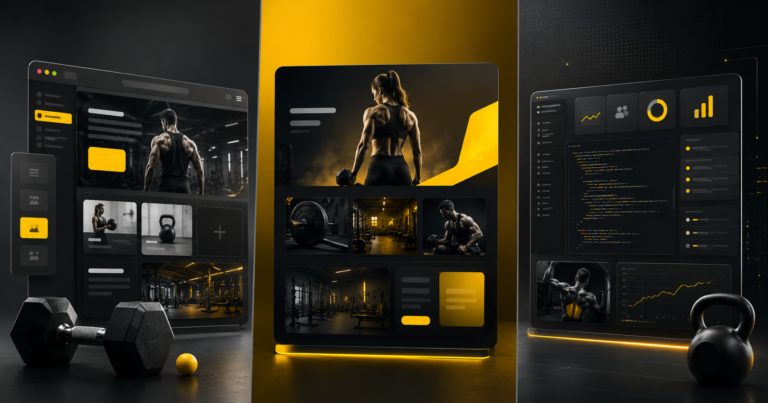
A gym website used to be a simple online business card: a logo, a few photos, an address and a phone number. That’s no longer enough. Today, your website is the centre of your marketing. Your ads point to it, your Instagram bio links to it, Google Maps sends people to it and your members use it to book and pay.
If your website can’t capture leads, take bookings and track results, your marketing budget is working with one hand tied behind its back.
This guide covers the features a gym marketing website must have. Not nice-to-have extras, but the essentials that help you attract prospects, convert them into members and keep them coming back. If your current site is missing several of these, you’re likely leaving members and money on the table.
Why Features Matter More Than Looks
Design matters. A modern, clean website builds trust. But a beautiful site that can’t take a booking, doesn’t load on mobile or doesn’t tell you where your leads come from won’t grow your gym.
Think of your website’s features as the machinery behind the scenes. They decide:
- How easily a visitor can become a lead
- How quickly your team can respond
- How smoothly someone can pay or book
- How well you can measure and improve your marketing
Let’s look at each must-have feature.
1. Mobile-First, Fast-Loading Design
Most visitors will see your website on a phone, often on a patchy mobile connection. A mobile-first design is built for small screens first and then adapted for desktop, rather than the other way around.
What it should include:
- Thumb-friendly buttons and menus
- Readable text without zooming
- Compressed images and lightweight code
- Pages that load in about three seconds or less
Why it’s mandatory: slow, clumsy mobile sites lose visitors and rank lower in search results. Every other feature on this list depends on people actually staying on your site.
2. Clear, Persistent Calls to Action
Your website should always make the next step obvious. A sticky “Book Free Trial” button in the header, or a fixed bar at the bottom of the mobile screen with call and WhatsApp buttons, keeps the action within reach no matter where the visitor is on the page.
Best practice: use one primary action (usually a free trial) and one secondary action (call or WhatsApp). Keep the wording specific, like “Claim Your Free 7-Day Pass”.
3. Online Trial Booking
Instead of asking people to call during office hours, let them pick a time slot for their trial directly on the website. This removes a big barrier, especially for people browsing late at night.
What to look for:
- A calendar showing available slots
- Instant confirmation by email, SMS or WhatsApp
- Automatic reminders before the visit
- Notifications to your team for every booking
Even a simple booking form with preferred time slots is better than nothing, but a real booking calendar reduces back-and-forth and no-shows.
4. Class Schedule With Booking
If you offer group classes, your schedule is one of your most visited pages. A static image of a timetable is hard to read on mobile and impossible to keep updated.
Must-haves:
- Mobile-friendly schedule with filters for day, class type and trainer
- Class descriptions, intensity levels and durations
- Online booking or waitlists for popular classes
- Easy updates for your team when classes change
Many gym management tools offer embeddable schedules that connect to your member database, which saves your staff time.
5. Online Payments and Membership Sales
When someone is motivated, let them commit immediately. Online payments allow visitors to buy memberships, class packs, personal training sessions or trial passes without waiting to visit the front desk.
Consider supporting:
- UPI, cards, net banking and wallets through a trusted payment gateway
- Recurring payments or auto-renewal for monthly plans
- Discount codes for campaigns and referrals
- Automatic receipts and invoices
Online payment also makes it easier to run time-limited offers, since people can lock in the deal straight away.
6. WhatsApp and Click-to-Call Integration
For many prospects, especially in India, WhatsApp is the most comfortable way to ask a question. A floating WhatsApp button with a pre-filled message, such as “Hi, I’d like to know more about your free trial”, makes starting a conversation effortless.
Pair it with click-to-call buttons on mobile, and make sure someone is actually monitoring and responding quickly. A WhatsApp button that leads to an unanswered chat is worse than none at all.
7. Lead Capture Forms and Lead Magnets
Not every visitor is ready to book a trial. Some are still researching. A lead magnet offers something valuable in exchange for their contact details, so you can follow up later.
Lead magnet ideas for gyms:
- A free 4-week beginner workout plan
- A simple Indian diet guide for weight loss or muscle gain
- A free body composition analysis
- A fitness challenge with prizes
- A BMI or calorie calculator that sends results by email or WhatsApp
Keep forms short and make it clear what people will get and when.
8. CRM and Lead Management Integration
Leads collected on your website need to go somewhere organised. Integrating your forms with a CRM, gym management software or at least a shared lead sheet ensures that every enquiry is recorded, assigned and followed up.
Key capabilities:
- Instant notification to the right staff member
- Lead status tracking (new, contacted, trial booked, joined, lost)
- Notes on each lead’s goals and objections
- Automatic follow-up messages
Without this, leads get lost in inboxes and phone notes, and you’ll never know which marketing actually worked.
9. Pricing and Membership Comparison
A clear pricing page or membership comparison table helps visitors understand their options. It also reduces the number of repetitive phone calls your staff handle.
Include:
- Plan names, durations and prices (or starting prices)
- What’s included in each plan
- Joining fees and any extra charges
- Current offers with end dates
- FAQs about freezing, cancellations and transfers
10. Social Proof and Review Integration
Prospects trust other members more than they trust your marketing. Your website should make that trust visible.
- Display your Google rating and a selection of recent reviews
- Feature transformation stories with photos, shared with consent
- Add short video testimonials from real members
- Show community photos from classes and events
Some tools can automatically pull your latest Google reviews onto your website, so the content stays fresh.
11. Trainer Profiles
People often choose a gym because of a coach. Individual trainer profiles with photos, certifications, specialities and a short personal introduction help prospects feel confident before they arrive. If you offer personal training, link each profile to a booking option.
12. Local SEO Features
Your website should help you rank when people search for gyms in your area.
- Consistent name, address and phone number on every page
- Embedded Google Map and directions
- Local business schema markup (for example, “ExerciseGym”)
- Dedicated pages for each service and each branch
- SEO-friendly page titles and meta descriptions that include your location
These features support your Google Business Profile and help you appear in both map results and organic listings.
13. Blog and Content Hub
A blog gives you a way to answer the questions your prospects are asking, from “How often should a beginner work out?” to “What to eat before a morning workout”. Helpful content builds authority, improves SEO and gives you material for social media and email.
Make it effective:
- Publish consistently, even if it’s just two posts a month
- Focus on topics your ideal members care about
- End every post with a relevant call to action
14. Referral and Member Engagement Tools
Your existing members are your best marketers. Make it easy for them to bring friends.
- A referral page where members can share a personal link or code
- Rewards for both the member and the friend, such as a free month or merchandise
- Challenge or leaderboard pages to build excitement
- A member login or portal for bookings, payments and progress tracking, if your software supports it
Engaged members stay longer and bring in others, lowering your cost of acquiring new members.
15. Analytics and Conversion Tracking
If you can’t measure it, you can’t improve it. Every gym marketing website should have:
- Google Analytics 4 to track visitors and behaviour
- Conversion events for forms, bookings, WhatsApp clicks, calls and purchases
- Google Search Console for search performance
- Meta Pixel and Google Ads tags if you run paid campaigns
- UTM tracking on links from social media, email and offline QR codes
With proper tracking, you can see which campaigns bring in trials and members, and stop spending on the ones that don’t.
Bonus Features Worth Considering
Once the essentials are in place, these features can give you an extra edge:
- Virtual tour: a 360-degree tour or video walkthrough of your facility
- Chatbot: answers common questions instantly and captures leads after hours
- Multilingual content: Hindi or regional language versions for broader reach
- Corporate wellness page: for companies looking for employee fitness partnerships
- Online programmes: virtual coaching or on-demand workouts to serve members outside the gym
Security, Compliance and Maintenance
These aren’t marketing features, but they protect everything else.
- HTTPS with a valid SSL certificate
- Privacy policy, terms and refund policy
- Secure handling of payment and personal data
- Regular backups and software updates
- Spam protection on forms
A hacked, broken or outdated website damages trust quickly, so plan for ongoing maintenance from day one.
How to Prioritise If You’re Starting Out
If your budget is limited, implement features in this order:
- Mobile-first, fast design with clear calls to action
- WhatsApp, click-to-call and a short trial form
- Pricing page and social proof
- Analytics and conversion tracking
- Local SEO features
- Online booking and payments
- CRM integration and automation
- Blog, lead magnets and referral tools
This order gets you capturing and measuring leads quickly, then builds in convenience and growth tools over time.
Frequently Asked Questions
Can WordPress handle all these features?
Yes. WordPress, combined with the right theme, plugins and integrations, can support booking, payments, CRM connections, SEO and more. The key is choosing reliable tools and keeping the site lightweight. See our comparison of WordPress vs Webflow vs custom gym websites for more detail.
Do I need gym management software?
It isn’t mandatory, but it makes things like class booking, payments, attendance and member management much easier, and many tools integrate with websites.
How much does it cost to add these features?
It depends on which features you need and which tools you use. Many features can be added in phases, so you don’t have to invest everything at once.
Related reading
- Gym Website Design Checklist: 15 Must-Haves for Fitness Sites
- Why Every Gym Needs a High-Converting Website in 2026
- WordPress vs Webflow vs Custom Gym Website: Which to Choose?
- Our service: Gym Website Design & Development
Make Your Website Work as Hard as You Do
Your gym website should be more than a pretty page. It should capture leads, take bookings, accept payments, build trust and show you exactly which marketing is working.
BananaBlocks Solutions builds gym and fitness websites with these features built in, from WhatsApp and booking integrations to SEO and tracking. Contact us for a free review of your current website and a clear plan for the features you need.