On this page (13)
- Key takeaways
- The key difference: people searching vs. people scrolling
- How Google Ads works
- How Instagram ads work
- Instagram ads vs. Google Ads: side by side
- Which one should you choose? Five common scenarios
- 1. Local service business (plumber, clinic, CA, coaching centre)
- 2. Visual product (clothing, jewellery, cakes, home decor)
- 3. Something new that people don’t search for yet
- 4. Online store with an existing product range
- 5. High-value B2B service
- How to test both without wasting money
- Not sure where to start?
Key takeaways
- Google Ads captures people already searching; Instagram ads reach people who aren’t looking yet
- Local services and urgent needs usually suit Google Ads first
- Visual products and new ideas usually suit Instagram first
- Fix your landing page and tracking before spending on either
- Judge both platforms on the same goal, such as cost per enquiry
- Start with one platform, prove it, then test the other
If you’ve decided to try paid advertising, you’ve probably narrowed it down to two options: Instagram ads or Google Ads. Both can bring in customers. Both let you start with a modest budget. And both can waste your money quickly if you pick the wrong one for what you sell.
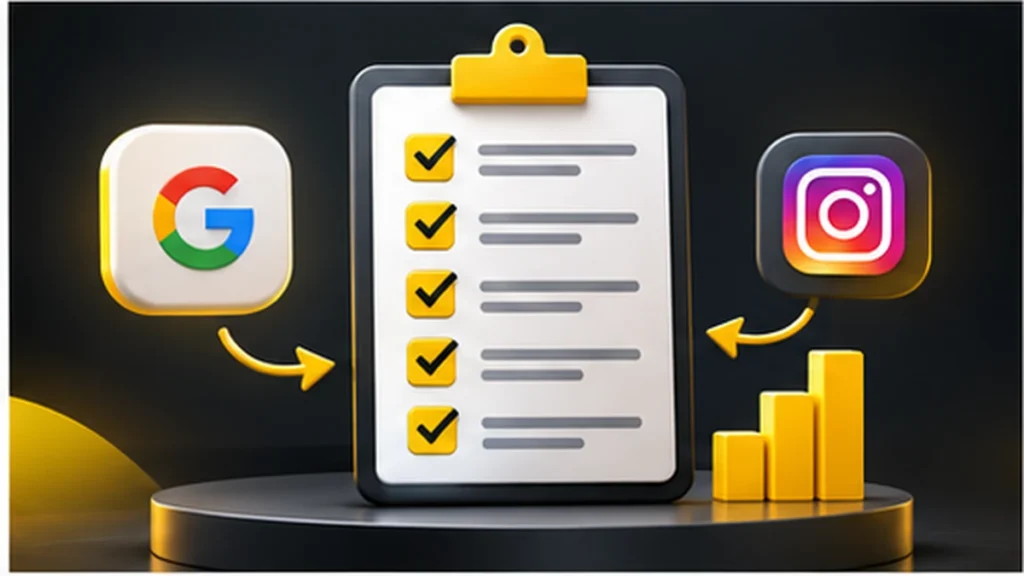
The right choice isn’t about which platform is “better.” It’s about how your customers find businesses like yours. This guide explains how each platform works, compares them side by side, and gives you a simple way to decide where to put your first rupee.
In this post:
- The key difference: demand capture vs. demand creation
- How Google Ads works
- How Instagram ads work
- Side-by-side comparison
- Which one to choose: five common scenarios
- How to test both without wasting money
The key difference: people searching vs. people scrolling
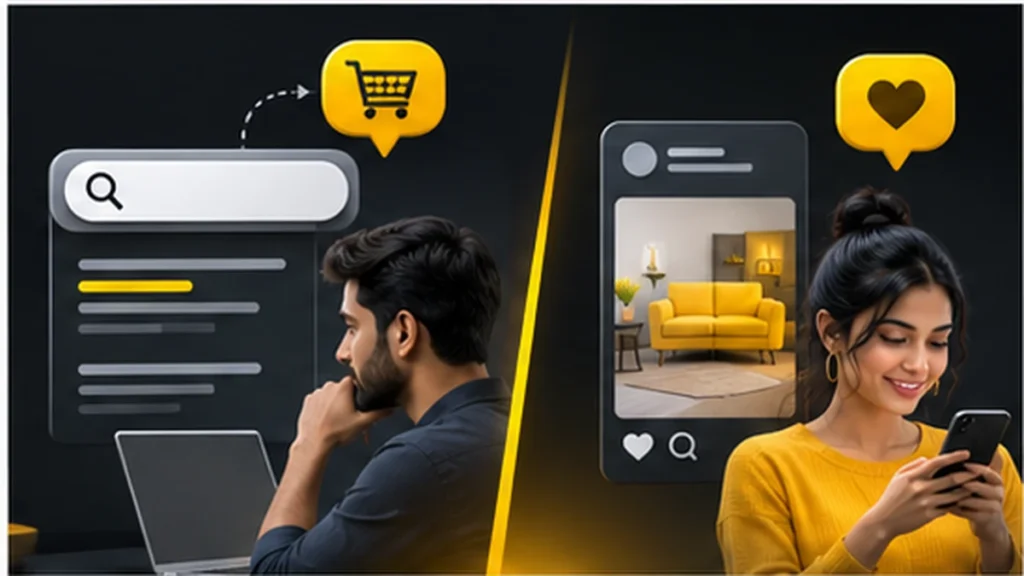
The simplest way to understand the two platforms is to think about what the customer is doing when they see your ad.
On Google, people are searching. Someone types “CA near me,” “AC repair Patna” or “buy running shoes online.” They already have a need and they’re looking for someone to solve it. Google Ads lets you show up at that moment. Marketers call this capturing demand.
On Instagram, people are scrolling. They’re watching Reels, checking friends’ stories and browsing their feed. They weren’t looking for you. Instagram ads interrupt that scroll with something interesting enough to stop for. This is creating demand: showing people something they didn’t know they wanted yet.
Both are valuable. But they suit different businesses, different products and different stages of the marketing funnel.
How Google Ads works
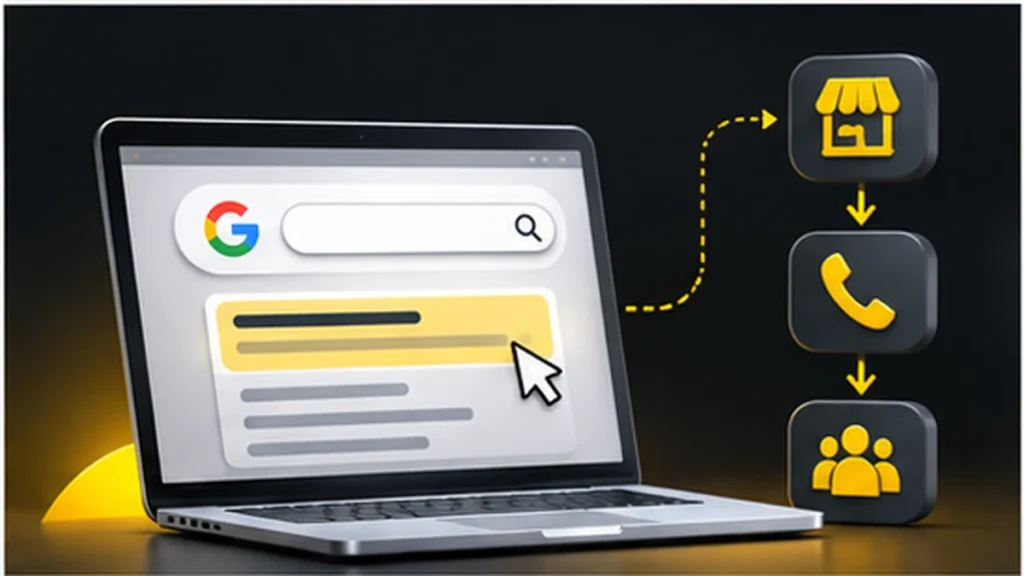
Google Ads covers several campaign types, but for most small businesses the starting point is Search ads: the text ads that appear above and below the regular results when someone searches.
- You choose keywords that describe what people search for when they need you, such as “dentist in Motihari” or “GST registration consultant.”
- You usually pay per click, not per view. You’re charged when someone clicks your ad.
- An auction decides placement. Your bid, your ad’s quality and your landing page’s relevance all affect where you show and what you pay.
- Other options include Performance Max (one campaign across Search, YouTube, Maps, Gmail and more), Shopping ads for online stores, and YouTube video ads.
Strengths: You reach people at the moment they need what you sell. Search intent is usually strong, so leads can be high quality. It works well for services people search for and for urgent needs.
Limitations: If nobody searches for what you sell (because it’s new, niche or an impulse buy), there’s little demand to capture. Popular keywords in competitive industries can be expensive per click. And text ads give you limited space to show off your brand.
How Instagram ads work

Instagram ads are created and managed in Meta Ads Manager, the same tool used for Facebook ads. You can run an ad on Instagram only or let Meta show it across Facebook, Instagram, Messenger and its partner apps.
- You choose an audience, by location, age, interests and behaviours, or let Meta’s AI find the right people with broad targeting and Advantage+ options.
- Ads appear in the feed, Stories and Reels, looking like regular posts, with a label marking them as sponsored.
- You can pay for different outcomes, such as reach, video views, messages, leads or sales, depending on the campaign objective.
- Creative does the heavy lifting. A scroll-stopping image or short video matters more than almost anything else.
Strengths: Instagram is visual, so it suits products and services that look good: fashion, food, beauty, home decor, events, travel and local experiences. It can introduce your brand to people who have never heard of you, and it’s easy to run ads that start a conversation on Instagram Direct or WhatsApp.
Limitations: People aren’t actively looking to buy, so many will scroll past or engage without buying. You need a steady supply of fresh creative, as people tire of seeing the same ad. Results also depend heavily on your tracking being set up correctly.
If you go with Instagram, our guide to setting up Meta Advantage+ campaigns on a small budget walks you through it step by step.
Instagram ads vs. Google Ads: side by side
| Google Ads (Search) | Instagram ads | |
|---|---|---|
| What the customer is doing | Searching for a solution | Scrolling for entertainment |
| What you’re doing | Capturing existing demand | Creating new demand |
| Targeting | Keywords and location | Audiences, interests, location and AI |
| Ad format | Mostly text (plus images, Shopping and video options) | Images, carousels, Stories and Reels |
| Typical pricing | Mostly pay per click | Pay per impression, with bidding for your chosen outcome |
| Best for | Services people search for, urgent needs, high-intent buyers | Visual products, new ideas, impulse buys, brand awareness |
| Creative effort | Lower: well-written text ads | Higher: regular new images and videos |
| Speed to leads | Often fast, if people search for you | Can be fast, but often needs testing |
Which one should you choose? Five common scenarios
1. Local service business (plumber, clinic, CA, coaching centre)
Start with Google Ads. People search when they need these services, often urgently. Showing up for “chartered accountant near me” or “physiotherapist in Patna” puts you in front of people ready to call. Add a strong Google Business Profile so you show up on Maps too.
2. Visual product (clothing, jewellery, cakes, home decor)
Start with Instagram. These products sell on looks, and people often discover them while browsing. Short Reels showing your product in use can stop the scroll in a way a text ad can’t.
3. Something new that people don’t search for yet
Start with Instagram. If you’ve launched a new product or service that people don’t know to search for, Google has little demand to capture. Instagram lets you show people what it is and why it’s useful.
4. Online store with an existing product range
Consider both. Google Shopping and Search ads capture people looking for specific products. Instagram ads help people discover your brand and bring back visitors who didn’t buy. Start with one, prove it works, then add the other.
5. High-value B2B service
Start with Google Ads, as long as people search for what you offer. Decision-makers often search when they have a problem to solve. Instagram can still help with brand building and retargeting later, though for many B2B businesses LinkedIn is a better second channel.
How to test both without wasting money
You don’t have to guess. A small, structured test will tell you which platform works for your business.
- Fix your landing page first. Whichever platform you use, ads send people to a page that has to convince them. Run through our landing page checklist before you spend anything.
- Set up conversion tracking. Make sure enquiries, calls, WhatsApp clicks and purchases are tracked in both Google Ads and Meta Ads Manager. Without it, you’re comparing guesses.
- Pick one goal. For example, cost per enquiry or cost per sale. Judge both platforms on the same goal, not on clicks or likes.
- Start with one platform. Use the scenarios above to choose. Give it at least a few weeks and a budget you’re comfortable spending to learn.
- Write strong ads. For Google, match your ad to the search. For Instagram, lead with an eye-catching visual and a clear offer. Our ad copy formulas work on both.
- Compare on cost per result. Once you have enough data, compare what each customer or lead cost on each platform, and check those leads actually turned into business.
- Shift budget to what works. Put more into the platform that delivers better results, and keep testing the other with a smaller budget if it shows promise.
Pro tip: The two platforms work well together. People who discover you on Instagram may later search for your business name on Google. Running a small branded search campaign alongside Instagram ads can help you capture those searches.
Not sure where to start?
Choosing the wrong platform can burn through a budget before you learn anything. BananaBlocks Solutions runs Google Ads and Instagram campaigns for small and growing businesses, and helps you test both the right way.
Book a free 30-minute ads strategy call and we’ll recommend where to start based on your business, your customers and your budget.

Written by
Andrew Akshat
Writes for the BananaBlocks team about websites, SEO and digital growth for small and growing businesses.
More on Paid Advertising