On this page (29)
- 1. Google is putting more ads into AI Mode
- What changed
- Why it matters for Indian SMBs
- Who it affects
- What to do
- 2. Meta’s Pixel now counts some conversions on customers’ devices
- What changed
- Why it matters for Indian SMBs
- Who it affects
- What to do
- 3. New Google Ads reports show where your money goes
- What changed
- Why it matters for Indian SMBs
- Who it affects
- What to do
- 4. Google tightens rules on AI-generated ads
- What changed
- Why it matters for Indian SMBs
- Who it affects
- What to do
- 5. A Google core update and changes to Business Profiles
- What changed
- Why it matters for Indian SMBs
- Who it affects
- What to do
- Upcoming deadlines
- Key takeaways
- References
- Want a second pair of eyes on your ad accounts?
Welcome to our first weekly deep dive. Every Friday, we step back from the daily news and look at the ad platform changes that matter most for small and growing businesses in India, with what changed, why it matters, who it affects and exactly what to do.
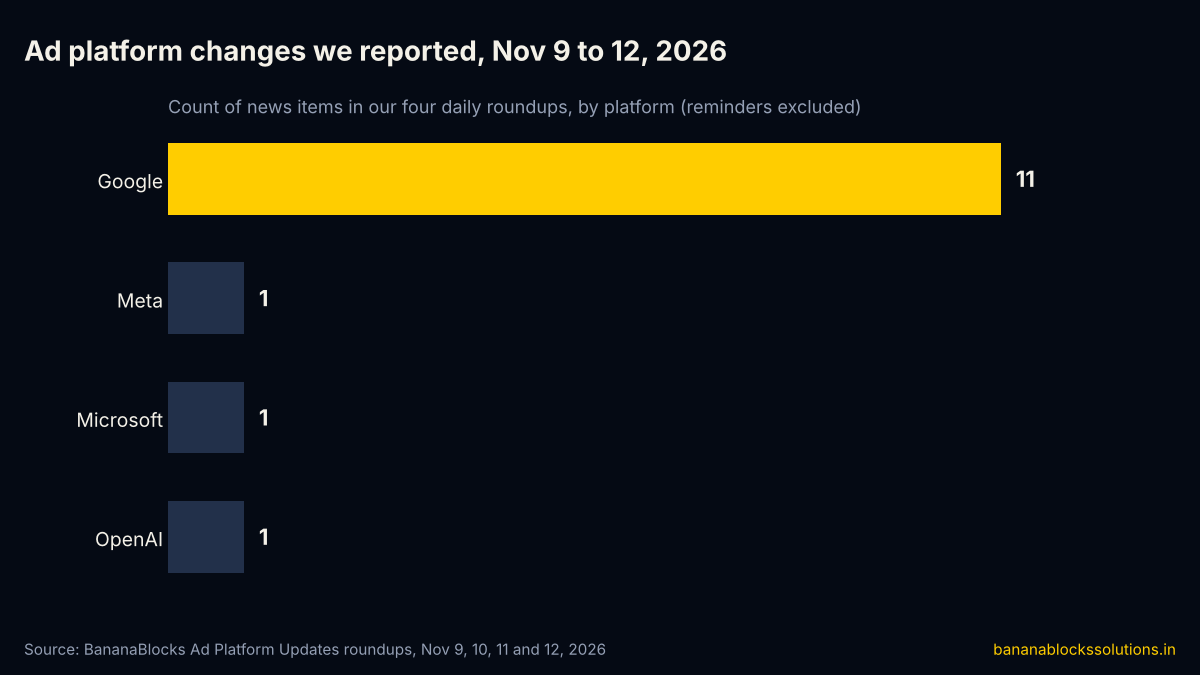
This week was dominated by Google. Ads are spreading deeper into AI-powered search, Google Ads gained new reports that help you see where your money goes, and Google tightened its rules on AI-generated ads. Meanwhile, Meta’s change to how its Pixel counts conversions went live on November 12.
This week’s big five:
- Google is putting more ads into AI Mode, and testing AI-written summaries on search ads
- Meta’s Pixel now counts some conversions on customers’ devices
- New Google Ads reports: invalid traffic, customer journeys and asset activity
- Google tightens rules on AI-generated ads
- A Google core update and changes to Business Profiles
1. Google is putting more ads into AI Mode
What changed
Ads are now showing on follow-up questions inside Google AI Mode conversations, not just on the first search. Google confirmed that “multiturn ads show up on responses to follow-up user queries as users engage in back-and-forth conversations with AI Mode,” and that they’re labelled “Sponsored” [1]. Separately, AI Mode answers have been spotted showing up to four ads, up from the usual one to three, though Google hasn’t commented on that specific change [2].
At the same time, Google is testing AI-generated summaries in regular search ads on mobile: one summary above the group of sponsored results, and an AI-written description under each ad [3]. This is a test, with no official comment.
Why it matters for Indian SMBs
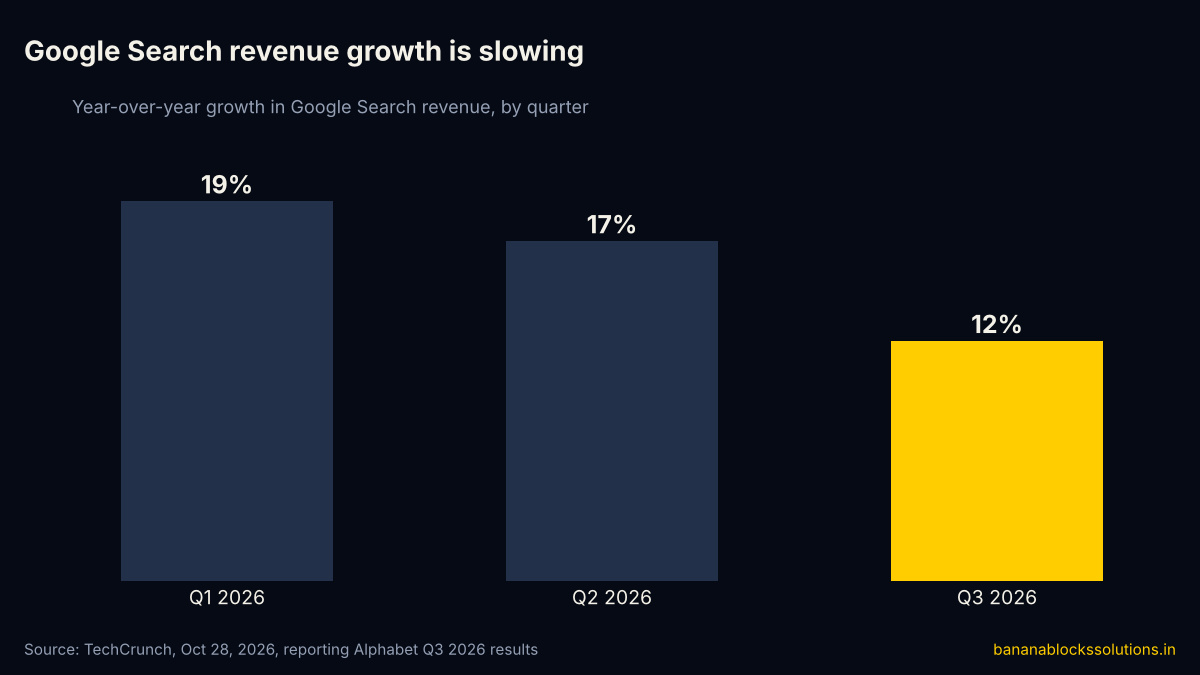
Ads in AI Mode expanded to India and nine other countries at the end of October, and existing Search, Shopping and Performance Max campaigns are eligible automatically. Google’s financial results help explain the push: Search revenue growth has slowed for two quarters in a row, from 19% year over year in Q1 2026 to 12% in Q3 [4]. Expect Google to keep adding ad space inside its AI experiences.
Who it affects
Anyone running Google Search, Shopping or Performance Max campaigns. Multiturn ads are currently a US feature, but AI Mode ads themselves already run in India.
What to do
- Review your negative keywords. More ad slots in more conversational searches mean more chances to match queries you don’t want.
- Check your match types. As we covered on October 30, exact and phrase match are less likely to reach follow-up questions than broad match, AI Max and Performance Max. If you test broad match, do it in a controlled campaign with conversion tracking in place.
- Make your landing pages easy to summarise. Google’s AI may draw on them. State your services, prices, locations and offers clearly near the top of the page.
- Watch your search terms report for new, longer, question-style queries.
2. Meta’s Pixel now counts some conversions on customers’ devices
What changed
From November 12, Meta’s “Measure conversions on customer devices” setting began measuring conversions. It’s on by default for datasets already sending events through the Pixel or Conversions API. According to Meta’s panel, measurement “happens on your customer’s device instead of exclusively on Meta servers,” using information the customer already gave the business (such as an email address) plus temporary device data [5]. Meta hasn’t said whether the extra conversions it recovers are used for bidding. Some reports say it isn’t active for people in the EU and UK and needs specific site set-ups, but those conditions aren’t confirmed in the panel text itself [5].
Why it matters for Indian SMBs
If you sell online and run Meta ads, your reported purchases may rise from this week without any change in real sales. Right in the middle of the festive and Black Friday season, that can make campaigns look better than they really are.
Who it affects
Advertisers using the Meta Pixel or Conversions API, especially ecommerce stores and businesses tracking bookings or leads on their website.
What to do
- Check the setting in Events Manager, under your dataset’s settings, and decide whether to keep it on.
- Mark November 12 on your reports so you can explain any jump later.
- Compare Meta-reported purchases with your actual orders in Shopify, WooCommerce or your booking system each week.
- Don’t raise budgets on reported results alone until you’ve checked them against real sales.
3. New Google Ads reports show where your money goes
What changed
Three new reporting features appeared this week:
- Invalid traffic card: A new card on the Google Ads Overview page shows “Estimated Savings” (invalid clicks, such as bots, click farms and accidental clicks, filtered before you were billed) and “Credited Cost” (credits for invalid activity found after billing). Google says it’s rolling out globally from the week of November 12 [6], [7].
- Customer Journey Insights (pilot): For eligible advertisers, a card shows how Performance Max, Search and Shopping campaigns move people through four stages: Unaware, Aware, Consider and Act [8].
- Asset Activity (beta): Some accounts are seeing a page that uses Google AI to report on asset performance, asset diversity, competitor performance and industry trends [9].
Why it matters for Indian SMBs
Small advertisers often worry about paying for fake or accidental clicks. The invalid traffic card is a global rollout, so Indian advertisers should see it too, and it shows how much Google has already filtered or credited. The customer journey card is a useful check on whether your ads only catch people who are already ready to buy. Our marketing funnel guide explains why that balance matters.
Who it affects
All Google Ads advertisers for the invalid traffic card. Eligible advertisers only for the two pilots.
What to do
- Open your Overview page and look for the invalid traffic card. Check the trend over the last few months.
- If you see the customer journey card, compare how many people your campaigns reach at each stage.
- Use Asset Activity, if you have it, to find weak headlines and images to replace before the holiday peak.
4. Google tightens rules on AI-generated ads
What changed
Google has clarified that “ads that impersonate public figures using AI aren’t allowed,” even “if they disclose that they were generated or edited using AI.” Google says this clarification doesn’t change how the policy is enforced [10], [11]. Earlier this month, Google also confirmed that ads in India are among those that show a visible AI label when they use assets designated as AI-created or AI-edited [12].
Why it matters for Indian SMBs
AI tools make it easy to create images and videos that look like celebrities or well-known people. Using them in ads is not allowed, and a disclosure doesn’t make it acceptable. At the same time, if you use AI-made images in Google ads targeting India, viewers may see a label on the ad.
Who it affects
Any advertiser using AI-generated images, video or voice in Google ads.
What to do
- Never use a public figure’s likeness, voice or name in AI-generated ad creative.
- Check the AI label setting on assets you created or edited with AI.
- Keep a record of which assets were AI-made, so you can answer any policy review quickly.
5. A Google core update and changes to Business Profiles
What changed
Google started its November 2026 core update on November 10. Google calls it “a regular update designed to better surface relevant, satisfying content,” and says the rollout may take up to two weeks [13], [14]. Separately, local SEO specialists have reported Google adding “Book Online” buttons to some Business Profiles whose owners didn’t set them up, with some of those links broken [15]. Google also published a new help page on how offers and promotional badges appear on Business Profiles, including how to remove unauthorised third-party offers [16], [17].
Why it matters for Indian SMBs
Core updates affect organic rankings, not ads, but many small businesses rely on both. During the rollout, organic traffic may swing up or down. Your Business Profile is often the first thing local customers see, so a broken booking button or an outdated offer can cost you calls.
Who it affects
Businesses that get leads from Google Search and Maps, especially local businesses.
What to do
- Don’t overreact to organic traffic changes until the core update finishes rolling out. Compare before-and-after data once it’s done.
- Make sure your search ads are ready to fill any short-term gap in organic leads during the holiday season.
- Search for your business on Google and Maps. Check for a booking button and click it. Fix or remove any wrong links.
- Review any offers or badges on your profile and remove anything outdated or that you didn’t add.
Upcoming deadlines
We’ve re-checked every date below against its source.
| Date | What happens | What to do |
|---|---|---|
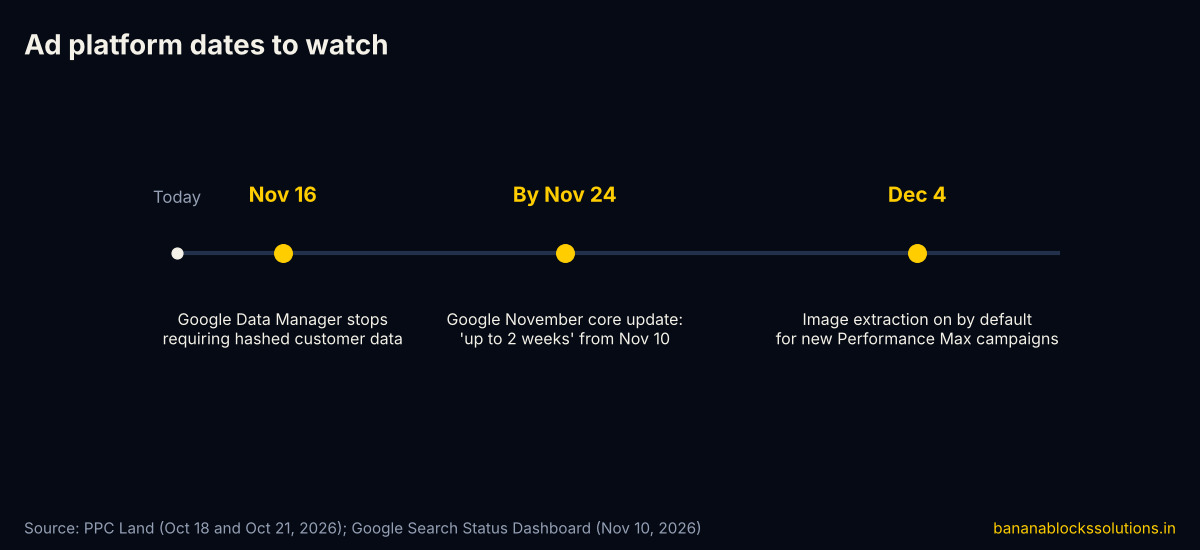
| November 16 | Google Ads Data Manager stops requiring SHA-256 hashed customer data and accepts encrypted data by default [18] | Note your Customer Match rates now so you can compare afterwards |
| By about November 24 | The November core update finishes rolling out (“up to 2 weeks” from November 10) [13] | Compare organic traffic after the rollout ends |
| Mid-November | Microsoft Advertising starts rolling out search term landing page reporting for Performance Max [21] | Check which landing pages Microsoft Performance Max uses |
| December 4 | Image extraction is on by default for new Performance Max campaigns, even if dynamic images are off at account level [19] | Check the setting on any new Performance Max campaign |
| No date set | Meta’s updated business and ad terms are paused; existing terms remain in effect [20] | No action needed; ignore older articles quoting November 20 |
Key takeaways
- ✅ Review negative keywords as Google adds more ads to AI Mode
- ✅ Compare Meta-reported conversions with real orders after November 12
- ✅ Check the new invalid traffic card in Google Ads
- ✅ Never use public figures’ likeness in AI-generated ads
- ✅ Wait for the core update to finish before judging organic changes
- ✅ Test the booking button and offers on your Google Business Profile
- ✅ Note the November 16 and December 4 dates in your calendar
References
- Search Engine Roundtable, “Google AI Mode Multiturn Ads Are Live – Follow-Up Query Ads,” Nov 9, 2026. Link
- Search Engine Roundtable, “Google AI Mode Now With Up To Four Ads,” Nov 4, 2026. Link
- Search Engine Roundtable, “Google Ads AI-Generated Summaries Above & Within Ads,” Nov 9, 2026. Link
- TechCrunch, “Google expands AI search ads globally as core ad growth slows,” Oct 28, 2026. Link
- PPC Land, “Meta Pixel will count more conversions from Nov 12 unless advertisers opt out,” Oct 27, 2026. Link
- Search Engine Roundtable, “Google Ads New Invalid Traffic (IVT) Overview Card,” Nov 12, 2026. Link
- Google, invalid traffic overview announcement and help page. Blog, Help
- Search Engine Roundtable, “New Google Ads Overview Page: Customer Journey Insights,” Nov 11, 2026. Link
- Search Engine Roundtable, “Google Ads New Asset Activity Section,” Nov 9, 2026. Link
- Search Engine Roundtable, “Google Ads Disallows Impersonate Public Figures With AI Even If Disclosed,” Nov 12, 2026. Link
- Google Ads policy, Unacceptable Business Practices and clarification notice. Policy, Notice
- Google Ads Help, “Use AI content label settings and disclosures.” Link
- Google Search Status Dashboard, November 2026 core update. Link
- Search Engine Roundtable, “Google November 2026 Core Update Is Rolling Out,” Nov 10, 2026. Link
- Search Engine Roundtable, “Google Adding Booking Links To Business Profiles Automatically?,” Nov 9, 2026. Link
- Search Engine Roundtable, “Google Business Profiles Manage Offers Help Document,” Nov 6, 2026. Link
- Google Business Profile Help, “Manage offers on your Business Profile.” Link
- PPC Land, “Google Ads Data Manager stops requiring hashed customer data November 16,” Oct 18, 2026. Link
- PPC Land, “Google turns on PMax image extraction by default from December 4,” Oct 21, 2026. Link
- PPC Land, “Meta halts its Nov 20 terms that would let it crawl business websites,” Nov 2026. Link
- Microsoft Advertising, “Build, steer, and measure your campaigns with AI: What’s new in Microsoft Advertising this October,” Oct 28, 2026. Link
Want a second pair of eyes on your ad accounts?
A lot changed this week, and most of it happens quietly in the background of your account. BananaBlocks Solutions manages Google, Meta and social ad campaigns for small and growing businesses, and keeps them up to date as the platforms change.
Book a free 30-minute ads review and we’ll check your account for anything you should adjust before the holiday rush.

Written by
Andrew Akshat
Writes for the BananaBlocks team about websites, SEO and digital growth for small and growing businesses.
More on Ad Platform Updates